The DropOS
A multi-tenant SaaS product designed to bring fairness, visibility and operational control to high-demand retail launches.

Role
Founder and product owner, leading product strategy, operational workflow design, system requirements, validation and AI-assisted implementation.
Context
A solo-founder product translating real retail-release pressure into a multi-tenant operational system.
Timeline
May 2026 to present.
Current status
Active private development, preparing for early pilot conversations. It is not presented as a launched platform with paying retail customers.
Evidence
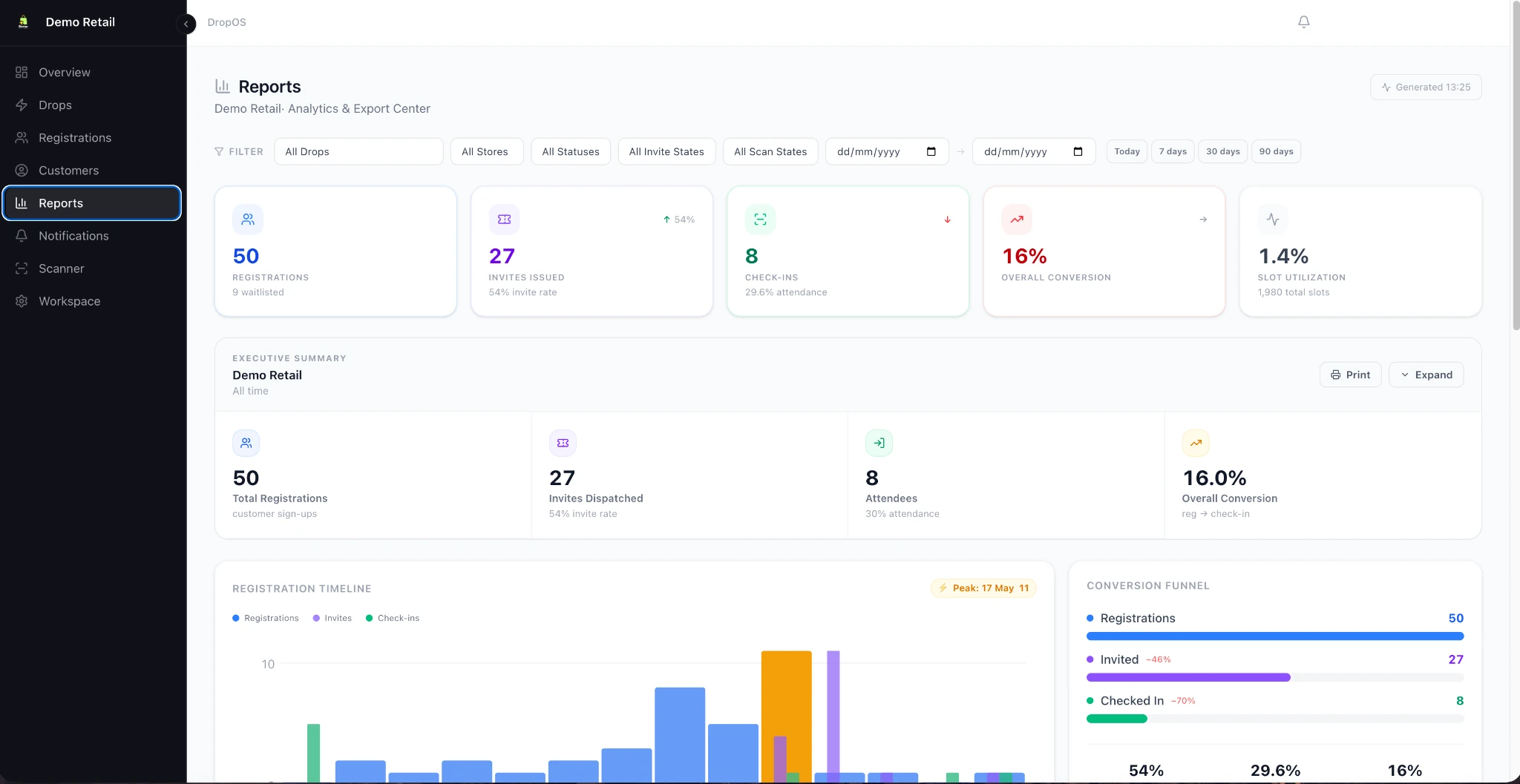
949 passing tests by Sprint 20, with tenant isolation, customer registration, first-come-first-served allocation, QR verification and check-in implemented. Raffle allocation and operational reporting remain partially implemented.
Limited releases create pressure at every point: registration, allocation, customer communication, in-store check-in and fulfilment. Fragmented tools make the process difficult to supervise and even harder to audit.
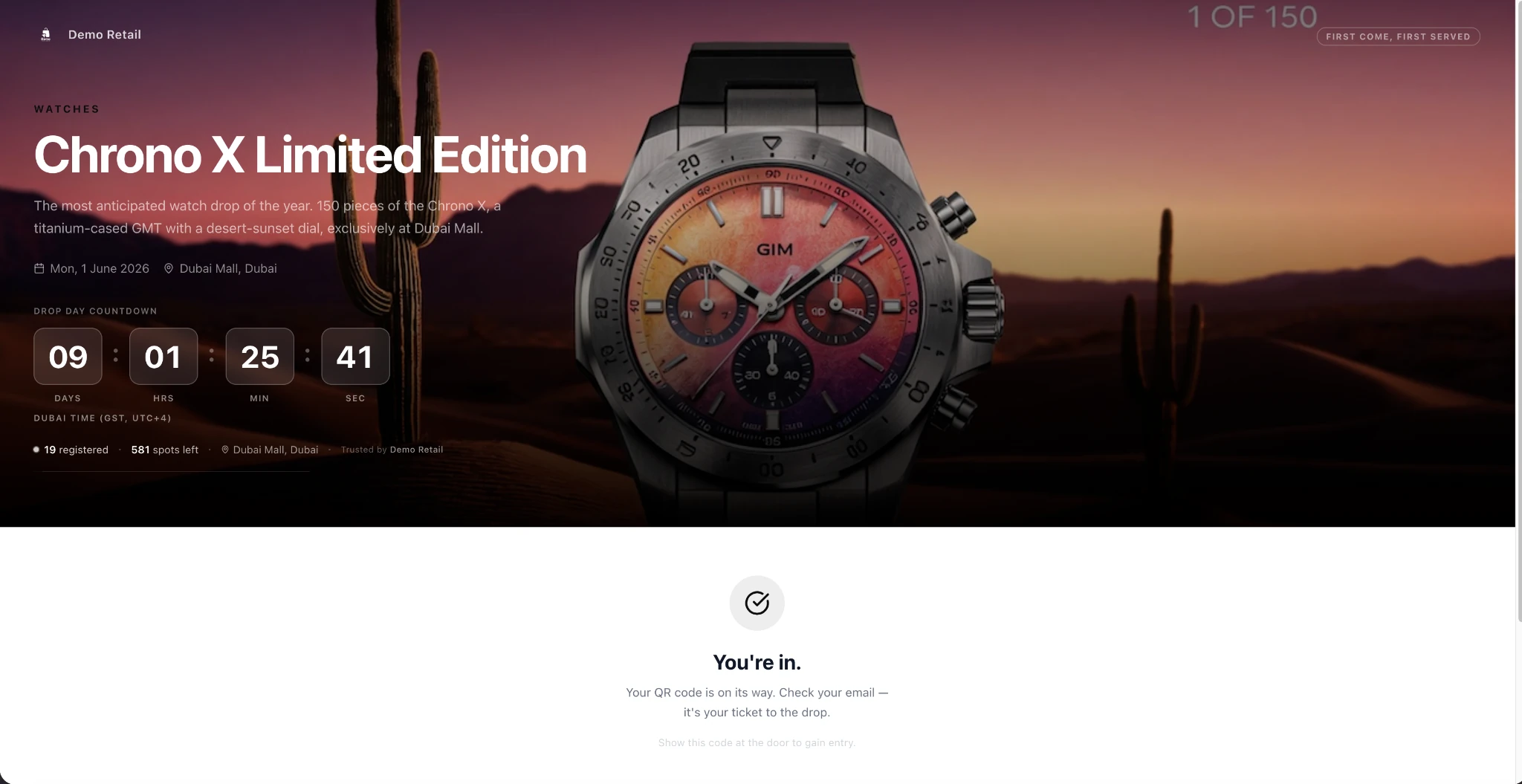
I shaped The DropOS as one operational system spanning registration, first-come-first-served and lottery allocation, QR check-in, draw review, dispatch and audit history, with tenant boundaries and role-based access designed into the product logic.
- 01Make fairness visible, not implied
- 02Treat every critical action as auditable
- 03Design for live operational pressure
- 04Separate tenant and role responsibilities clearly
Four scan states, not a binary answer.
A QR scan can be valid, invalid or expired, valid for the wrong collection window, or already used. Making those states explicit reduces door-team guesswork and preserves the first check-in record.
Show the intended model without overstating delivery.
Automatic waitlist promotion belongs in the product model, but remains planned. The same is true of the in-scanner override for a wrong collection window, so the case study separates implemented capability from future direction.
By Sprint 20, the product had 949 passing tests covering its growing operational surface. The work demonstrates how I turn edge cases, policy and real-world pressure into explicit, testable product behaviour.